Author Article: Nina Bell
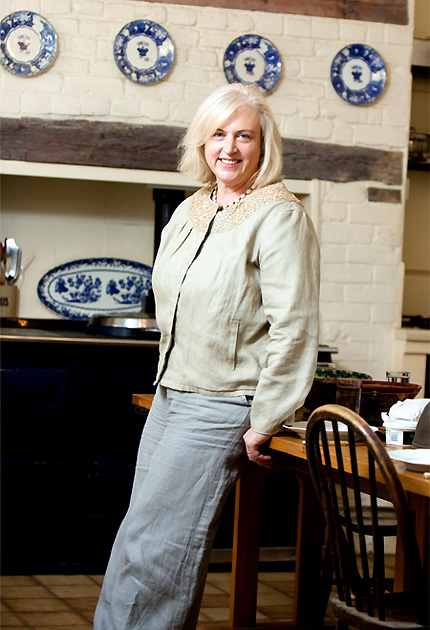 I recently had the opportunity to read and review Nina Bell’s new book The Empty Nesters, and I’m glad as I did as Nina has once again delivered a riveting family drama. This had me curious about why Nina chooses the stories that she does to write about, and how she gets her ideas. I was lucky enough to ask Nina to write us a piece for Chicklitreviews.com about this very subject, and we’re delighted to present you with Nina’s piece below! Thank you Nina!
WRITING FAMILY DRAMA
By Nina Bell
Recently we went to Lucy and Jon’s 2nd-time round wedding in a church. Jon’s thirteen-year old daughter, Emily, was giving him away. As she stood next to him at the altar, the vicar gave his usual address:
‘Lucy and Jon are now leaving their families behind,’ he said. ‘And forming a new family together.’
Emily went ashen. The gesture intended to make her feel included in their day seemed to exclude her from the rest of their lives. It sounded as if Jon’s love would now only be for his new wife. Emily was too tearful to be able to make her speech at the reception. Lucy, in turn, was upset, because she felt that Emily was being selfish in creating difficulties on Lucy’s special day.
That’s why I write family dramas. The weapons that fascinate me aren’t guns and knives, but a few careless words. The vicar hadn’t considered how the traditional service might affect a 21st century family. Emily and Lucy’s relationship always had an edge, and has got worse since the wedding.
Every so often, a survey pops up to say that friends are now more important than family to most people. But your family is where you were made, both genetically and through your early experiences. Psychology is an important part of my research. While writing The Empty Nesters, I came across the theory that, in your first five years, you establish a ‘script’ or a view of how your life is going to be. That then permanently informs the way you make decisions or how you see events. You might be running your own successful mail order company, like my character, Alice, but if your mother took no notice of you when you were tiny, you’ll never think you’re good enough. And at times of stress and change – such as when your children leave home – that neglected child inside takes over.
I don’t put friends and family in my novels, but I do draw on their – and my - experiences as inspiration. When three different friends fell out with their sisters-in-law one Christmas, I knew there was a novel there. None of those arguments are in Sisters-In-Law, but I try to look behind them to see what is really going on. Is it a question of different customs? Is it a deliberate snub? Or is she just too busy and tired to realise she’s been rude?
I read books on syndromes, such as alcoholism, depression and abuse, and then talk to therapists, plus at least one sufferer. I weave it all together when building a character. I was so pleased when a therapist phoned me the other day to say that she is using Lovers & Liars, my third novel, as a therapeutic tool to help women who are in abusive relationships.
I’m also interested in sibling rivalry and birth order. I’m the eldest, with three younger brothers. No five year old girl would feel competitive with three year old boys, let alone a thirteen year old girl and eleven year old boys. So I don’t feel the need to be as competitive within the family as, say, one friend, who is the youngest of five. She presumably had to fight her corner every day of her life, so sometimes I find her quite aggressive. She meanwhile, still seems to feel small and vulnerable, unaware of her powerful effect on people. And maybe she finds me too older-sister bossy? All this is important in building a character, but it sometimes isn’t directly relevant to the story, so it becomes part of the background that never makes it onto the page. But it’s still important that the author is clear about it.
And family don’t go away. If you fall out with friends, you usually just see less of them. Families pop up at Christmas, weddings, funerals etc. We expect a lot from our families – fairness, loyalty, love – but we take them for granted more than we would any friend. It’s a toxic cocktail – but oh, such a fertile ground for novelists.
- Digg
- Stumble it!
- AW Author Article: Carol Snow - Mothers and Writing
- Author Article: Gillian Duffy's 5 Commandments for Aspiring Authors!
- AW Author Article: Meredith Mileti - Tastes Like Love?