
AW Author Interview: Amy Hatvany
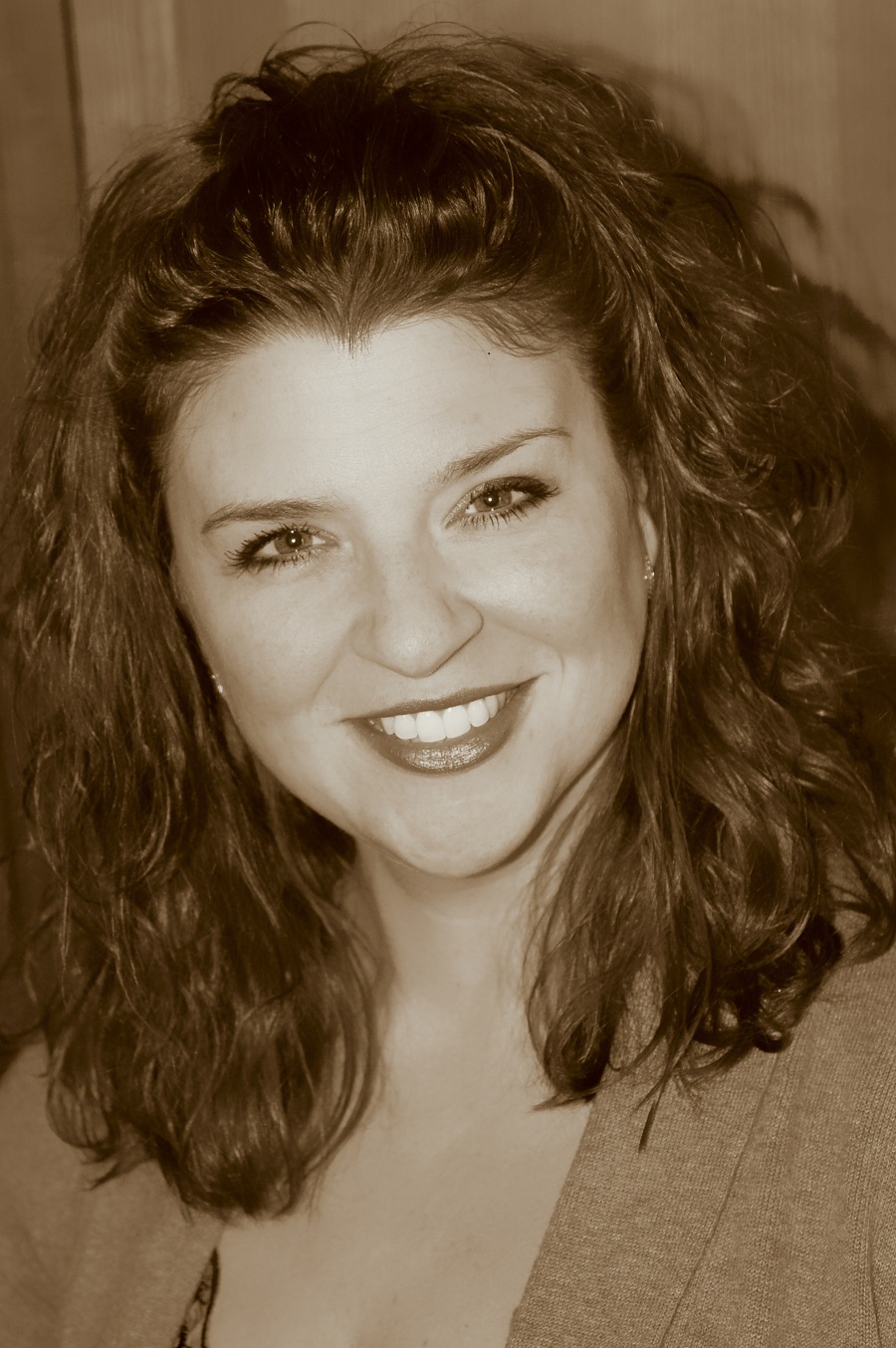 Just recently, I bought myself Amy Hatvany’s third novel Best Kept Secret. I was utterly blown away with the novel - you can read my review here! - and I just had to email Amy to tell her how much I loved the novel. How that, despite not being a mother or having an addiction, I could really sympathise and understand what Cadence was going through! Amy agreed to answer some questions for me, and here’s what she had to say!
1. Can you tell us about your latest novel Best Kept Secret?
BEST KEPT SECRET tells the story of Cadence Sutton, a woman who (after a messy divorce) slowly spirals into alcoholism and not only has to come to terms with her personal failings, she also must fight to regain custody of her young son. At a deeper level, it’s about the pressure women face in our society - whether or not they are mothers - to do everything “perfectly,” and what happens to us (mentally, emotionally, and physically) when we can’t. Ultimately, it is an honest exploration of the space where addiction and motherhood intersect, and of how no matter the mistakes you’ve made, there is always hope. There is always a way to fight your way out of the dark.
2. Your website tells me you’re going to have a book out next year (2012) and a book out in 2013 too. Can you tell us anything about those upcoming novels?
Yes! OUTSIDE THE LINES is due out in February, 2012, and tells the story of a woman searching for her homeless and mentally ill father, whom she has been estranged from for twenty years. It’s told in alternating viewpoints of both the daughter and father, past and present, which was a departure for me as a writer and I am very pleased with how it turned out.
The one I’m currently working on is as yet unnamed. It explores what happens when a woman is suddenly and unexpectedly thrust into the role of full-time mother and is forced to confront the complicated reasons behind her previously hard-fast decision to remain childless.
3. Best Kept Secret is about many things, but the main draw, the main thing people will see when they look at the cover, will read when they look at the synopsis is the alcoholism Cadence suffers with. It’s not a topic that’s widely covered in Chick Lit (it’s clearly a Chick Lit taboo!). What made you decide to write about alcoholism?
While the plot and characters are fiction, I was inspired to write the book based on my own experiences of being a mother and an alcoholic. The emotional experiences Cadence has are much like what I went through - the guilt, the shame, the denial and disbelief that I couldn’t just figure out a way to stop drinking on my own. I’d had a lot of success in my life before that point, and I didn’t understand how in the world I couldn’t just put an end to a behavior that was so obviously destroying me.
I wanted to tell a story that showed how easily a seemingly “together” person can slip into an addictive behavior. And how hard it is for women, especially, to ask for help.
4. The biography on your website makes no mention of you being an alcoholic, so how much research did you have to put in to make it believable? It make it so readers like myself could see that Cadence wasn’t your ‘stero-typical’ alcoholic (for me, I felt this line summed it up: “I didn’t sit down one night and decide that downing two bottles of wine was a brilliant idea.”), that Cadence didn’t mean to become alcohol-dependent?
I am in recovery, so much of my “research” was first-hand! I am very much like Cadence in that I maintained a very happy, confident exterior for the rest of the world to see, but subconsciously, I struggled with feelings of loneliness and fear. I was such a convincing actress, though, I had gone through a terrible divorce, and like Cadence, developed a bad case of insomnia. I never really drank much before that point, so that first glass of wine relaxed me and seemed like an easy solution to my sleeping issues. Of course, I didn’t understand how easily I’d build a physical tolerance to alcohol, and how dependent I’d become on the mental and emotional “escape” my nightly goblet of wine gave me from the pressure of single motherhood. Eventually, I, too, came to a point where I had a stare down with a bottle of pills, unsure if I really wanted to continue living, but the thought of my children growing up without me was what led me to finally ask for help. I’ve been sober almost six years, and I know it sounds strange to say, I feel like my spiral into drinking was one of the best things that could have happened for me. It woke me up. And it gave me the inspiration to write the book and let other women know they are not alone in this kind of struggle.
5. At the front of Best Kept Secret there are pages of quotes from fellow authors, all extolling the virtues of your novel. What was it like seeing that for the first time? Especially since a lot of authors don’t seem to get that large a reaction! (For the record, all of those authors were right and then some.)
Thank you so much for that! Seeing those quotes come in was such a thrill - I could barely believe they were talking about something I’d written. I’m so honored that writers like Luanne Rice and Emily Giffin, writers I’ve adored for years, took the time to read my book and say such lovely things about it.
6. Whilst Best Kept Secret is about alcoholism and how dangerous it can be to think that one glass or two glasses a night is fine and dandy, it’s also about how people see themselves. I don’t want to make excuses for Cadence, but she was going through a tough time, and she didn’t feel like she was good enough and I found the scenes with her son to be heart-wrenching because I knew that despite everything Cadence wouldn’t intentionally harm her child. Did you find it emotional writing those scenes, the scenes with Cadence and Charlie? The scenes where Cadence was struggling with it all, becoming a single mom?
The hardest part was definitely revisiting the shame and guilt of what it is like to drink in front of a child. The thought of alcohol really does make me ill, now, so having to go back to the time when I was drinking every day and remembering what it felt like - the physical sensations, and then the emotional backlash that always immediately followed - was extremely difficult.
I think the easiest part was writing the other scenes with Cadence and Charlie, showing how they were connected, how much she adores him, and he loves and needs her. I have an incredible relationship with my children, and all I had to do was pull that feeling up, and those scenes just kind of appeared on the page. (Plus, my son actually did call them “blueberry stones” instead of “blueberry scones”!) My life with my children is filled with so many tender, wonderful moments, and getting to infuse Cadence and Charlie’s relationship with those kinds of emotions was my favorite aspect of writing the story.
7. I’m a firm believer that you shouldn’t judge someone because of their past problems and I find the fightback from those problems is what really proves just how big a person they are. The way Cadence fought back from her big, black hole when she could have easily just given up was amazing to read. Do you stand by the custody decision that’s made (without spoiling it for readers) (my two cents is a big fat yes with a ‘for now…’ tagged on to it!)?
I do stand by the decision, and I like your “for now” tag!! Hmm…sequel?
8. How did you feel when you first saw the cover for Best Kept Secret? I really love it and I said in my review that it’s very atmospheric and it goes with the contents beautifully. It really captures the essence of the story. (I really hope I didn’t just answer your question for you!)
I was literally stunned by the cover - as a writer, I think in words more than images, so I have such admiration and gratitude for the artists who interpreted the story and came up with it! They are amazing, and I still love the cover every time I see it!
9. Where do you get the inspiration for your novels? From what I can see from your forthcoming books and the books already out, you do like to tackle some hard-hitting subjects. Do you purposefully set out to write books that stand out more and are more real than others, or do they just happen to be things you like writing about, do you like pushing the limits with your novels?
Well, it may sound kind of cheesy to say, but I really do believe that all the growth I’ve ever experienced in my life has been rooted in the tough things I’ve gone through, so that’s what interests me. How characters develop as a result of a significant event - especially how we, as women in our culture, are faced with so many challenges and what we do to rise up and face them every day. Anne Lamott says, “There’s no point in writing hopeless novels. We all know we’re going to die; what’s important is the kind of men and women we are in the face of this,” and I think that’s why I write the books I do. How we tackle what life throws our way is what defines who we are - and exploring those kinds of journeys is the work that brings me joy; finding a way to see hope in the darkest of circumstances is such a powerful quality for characters to discover within themselves.
I also think that writing about the tough stuff helps readers (and me!) feel maybe a little less alone in whatever we struggle with. To read something and feel, “Oh, I’m not the only person to ever have those thoughts/feelings,” brings about a sense of connection that I cherish when I read other authors’ works. And that’s the fundamental reason I write - to connect.
10. Your biography tells me you’ve always been a chatty person, always been a lover of words, why did it take so long for you to put pen to paper (or finger to laptop) to write your first novel The Kind of Love That Saves You? Was that your first effort or was that just your first published effort?
I was only twenty-five when I began writing The Kind of Love That Saves You, and it was published when I was twenty-seven. I think I fell for the idea that getting published is too hard, and it took a few years after graduating from college to realize writing is what I love, and what I’m meant to do. (I still work a day job, though, too…for now!)
11. What kind of books do you read yourself, when you’re not busy with your second (and last! - that made me laugh in your biography and I felt I had to get it in somewhere) husband and kids?
I’m a huge Chick Lit fan - Jennifer Weiner, Emily Giffin, Sarah Pekkanen…the list goes on and on. Any kind of literary fiction, really - commercial or not, I’ll read it. I need a book-buying intervention - they’re about to take over my house!!! [Ed note: boy do I know how that feels, my bedroom is over-run with books!]
12. Finally, what advice do you wish you’d have been told when you first started writing novels?
That nothing happens quickly in the publishing world. From the time you finish the first draft of your book, through finding an agent, publisher and actually getting published can take upwards of two years. At least! There’s a lot of “man behind the curtain” action that goes on, and patience with the process is something that I’ve developed…slowly! Also, that publishing is equal parts business as art - writers who understand this, and grow some savvy in terms of marketing, may have an easier time of weathering the sometimes challenging road.
Thanks so much Amy!
- Digg
- Stumble it!
- AW Giveaway: What Came First by Carol Snow
- AW Book News: The Bird Sisters by Rebecca Rasmussen
- AW Book Review: Past Perfect by Leila Sales




July 18th, 2011 at 3:39 pm
This is one of those books that once I’d read what it was about. I wanted to read it. I’m definitely going to buy this book and look for Amy’s other books.
Amy your a strong person and an inspiration to us all on getting through the hard time in your life. Well done. You were able to have a bad experience and write about it!