Author Interview: Rachel Hore
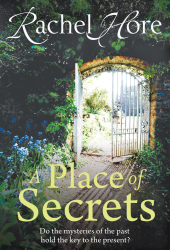
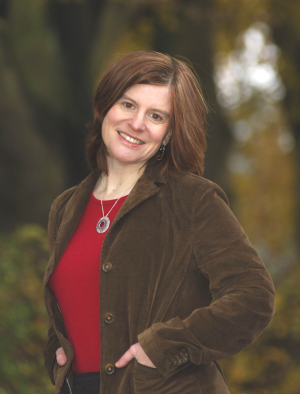 I recently read Rachel Hore’s latest novel A Place of Secrets and I was completely blown away by how much I enjoyed the novel. It had a fantastic mix of history, romance, and family secrets and anyone who loves all of those things will undoubtedly love the book! I got the chance to ask Rachel some questions and here are her answers!
1. Can you tell us about your latest novel A Place of Secrets in your own words?
Two women, though divided by centuries of time, are linked by a special place: a tower in a Norfolk forest used to view the night sky. Each is trapped in her own particular set of circumstances, and must find the way to free herself. Jude is an auctioneer, who is mourning her husband. She comes to Starbrough Hall to value a collection of 18th century astronomical instruments and learns the tragic story of Esther Wickham, the astronomer’s adopted daughter. I liked the idea that a place can be magical because of all the things that have happened there in history.
2. Are you currently working on a new novel? Can you tell us anything about it?
I’ve written half of my next novel and expect to finish it in the spring. It starts in Cornwall before the Second World War before moving on to all sorts of places, and is about misplaced faithfulness and undying love.
3. A Place of Secrets was recently chosen as one of Richard and Judy’s Book Club picks, how did you feel when you found out the news? Did you only find when Richard and Judy officially announced it?
I felt astonished and elated. To have Richard and Judy endorse one’s book assures a very high level of exposure, and I consider it a great compliment that they chose it. There are so many good books out there, after all. They let me know about a month before the launch and I wasn’t allowed to tell a soul.
4. The Wickham family history in A Place of Secrets is incredibly complex, how much research did you have to do to make sure all the facts about astronomy was correct for the 18th Century, which was Anthony Wickham’s time?
Funnily enough I didn’t think of it as complex as I got so ‘into’ it all when I read books and diaries about astronomical discovery and about Norfolk life in the second half of the eighteenth century. The gaps I didn’t read about I imagined - it’s amazing how natural this process became. I did ask an astronomer from a local observatory to check at proof stage for errors.
 5. Did you know from the beginning of A Place of Secrets how all of the plot strands tied together, or did you mainly just wing it and see it all panned out?
I had some of the key scenes in mind, particularly the final scene, but I love discovering story as I go along - that’s part of the pleasure of writing.
6. Despite not being a huge historical fan, I was really taken by Esther’s story. Where did you get the idea from for Esther’s story and was Esther’s story all entirely fictional?
Right at the beginning I had a picture in my mind of a lonely astronomer who befriends a little girl. I don’t know where this came from, but the purity and poignancy of this relationship appealed to me. Later I read about William Herschel, the astronomer, who had a sister, Caroline, who assisted him, and I used one or two details from her diaries to help imagine Esther‘s work.
7. Why did you decide to insert historical elements into your books? Is history something you’ve always been passionate about?
Our whole lives and identities are about where we’ve come from. Life is about history and you can’t understand the world properly without knowing all the background. Think of history as being hundreds of millions of stories - or one big story with hundreds of millions of voices, if you like. Don’t you want to hear them all? I studied History at university and it’s still opening my eyes to so much.
8. As well as being part of Richard and Judy’s Book Club for A Place of Secrets, The Glass Painter’s Daughter also made the short-list for the RNA’s Romantic Novel of the Year award, what was that experience like?
Slightly more hair-raising in that there were six short listed titles and only one winner. I had to wait months to hear those words ‘and the winner is…’ and to be disappointed that it wasn’t me. Still, it was wonderful being part of it all, and I’m a great supporter of the Romantic Novelists’ Association, which cultivates creative writers at all levels of development.
9. As well as your novels having great mysteries to solve, you also manage to add in some fantastic romantic elements, in particular with Jude and Euan in A Place of Secrets, which was wonderful to read about. Why do you feel it’s important to insert a nice romantic story into your books?
I think it was Tolkien who held that the only themes anyone was interested in were love and death. There are both in my books, but I’m an optimist and believe that love wins out.
10. All four of your novels has been published by Simon and Schuster, how did your original book deal come around? How long did it take to become a published author?
I had to endure the awful situation of my manuscript being sent to about ten publishers at once. A lot said no, a couple said maybe, then one very firmly said yes. I’ve stayed with them ever since - they’ve been staunch supporters and are all lovely people. I’d messed about trying to write short stories before attempting a novel. Since I’d worked for years as a fiction editor I did have a clue or two about the craft. I was just very relieved that it all worked on the page. It took me about 14 months to write The Dream House; in fact the others have taken that amount of time, too.
11. If you had to choose a genre to place your books into, what genre would it be? I personally would say ‘Women’s Fiction’, but I’d say your books could fall under a number of genres.
I think I’d prefer others to stick the labels on. I just tell the stories as they come. I certainly don’t feel I’m writing for anyone in particular, just myself, which doesn’t mean to say that I don’t believe my readers to be wise and wonderful people - they’re clearly very discerning!
12. If you were to be stranded on a desert island and could only take three novels, which would they be and why?
Robinson Crusoe by Daniel Defoe would give me a few clues about survival, Middlemarch by George Eliot is nice and long and I haven’t managed to finish it yet despite starting several times, and Virginia Woolf’s Orlando always delights me with its playful journey across time and place. It would definitely take me out of myself.
13. Your biography mentions you’re married to a writer yourself, D.J Taylor, does your husband help you out of plot holes or problems (and vice versa)? Would you ever collaborate with him on a book?
I will occasionally badger him to speed read what I’ve done and he’ll say something like ‘too much boring mechanics in Chapter 2’ or ‘Yes, it’s shaping up,’ which funnily I find really helpful. He never lets anyone near his work until it’s done, but occasionally he’ll outline a plot dilemma to me and asks my opinion - then will still do his own thing. No, we’d be a complete disaster as a collaborating team.
14. Finally, what advice would you give to those wanting to write a novel themselves?
Find a regular time during the day and a space where you feel comfortable and make sure that you sit down with your idea and try writing every day, even when there are contending attractions. There are many short courses available now, and it can be worth finding one that suits your situation just to get a few tips and a little support. You have to make sure your work is complete and as good as you can possibly make it before you start thinking of seeking publication.
Thank you for your good questions!
No, thank you Rachel!
- Digg
- Stumble it!
- Author Interview: Alexandra Potter
- AW Author Interview: Elodia Strain
- Author Interview: Lucy-Anne Holmes