
Author Interview: Janet Skeslien Charles
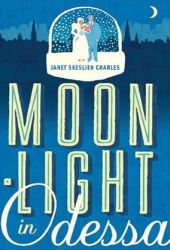
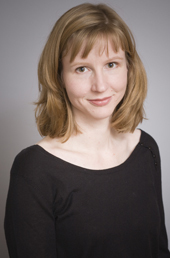 Back in July I got the chance to read Moonlight In Odessa by Janet Skeslien Charles, the novel that won the Melissa Nathan Award for Comedy Romance this year, and I thoroughly enjoyed it. We also got to interview Janet, about the book, about Odessa and about winning such a prestigious Chick Lit award! Enjoy the interview, and do enter our giveaway to win a copy of Moonlight In Odessa!
1. Tell us about your debut novel ‘Moonlight In Odessa’ in your own words.
Moonlight in Odessa is the story of Daria, a woman who wants more. She wants a great husband, an interesting job, good friends, and a family some day. A whip-smart engineer, Daria spends her days under-employed as a secretary (a job she was lucky to get in a tough economy), she spends her evenings interpreting at a matchmaking agency that pairs lonely American men and desperate Ukrainian women. She spends her nights wondering if there is something better out there. When an American client offers her a one-way ticket out of poverty, Daria jumps at the chance to leave. But is the grass always greener on the other side of the world?
2. Are you working on a second book at all, can you tell us anything about it if so?
I’m working on another novel set in Odessa. We’ll definitely see Daria and Boba again.
3. I have to be honest and say that I wasn’t totally sure Moonlight In Odessa was my thing. Mail-order brides? Set in a city I’ve never heard of in Ukraine? But, to my surprise, I loved it. Who would you say the book appeals to? It doesn’t look like a chick lit book, but it has the elements of one, so where do you stand on that?
I am so glad that you enjoyed the novel! As a teacher and as an avid reader, I always want to teach and to learn. I wanted to share my love of Odessa with readers, and I learned so much in researching mail-order brides. Did you know that the first mail-order brides who travelled to America were English? They travelled to Virginia in 1619 and were called ‘Tobacco Brides’ because upon marriage, the groom would reimburse the cost of his wife’s passage with 120 pounds of fine-leaf tobacco.
I hope that the book appeals to both men and women. I wrote the book for my sister and mother as well as for my husband and father. I receive many kind emails from both men and women who tell me that they enjoyed the novel.
4. Is the Odessa you portray in the book the same Odessa I would find if I went to visit it today, do they really have no Internet and dodgy phone-lines? I don’t recall Daria ever mentioning the year Moonlight In Odessa is set in, although I may have missed it and I apologise if so!
The book is set in Odessa in 1996. (It is easy to miss. On page 9, Daria mentioned that it is five years after Ukraine gained independence in 1991.) When I taught there in 1994-6, our school and the foundation I worked for did not have internet. Though Odessa was a city of a million, my home phone number had only six digits, which shows that not many people had phone lines. That has all changed. There are internet cafes, many people and businesses have internet and mobiles. It is a modern city.
5. The Odessa you do portray isn’t exactly something that makes me want to go and visit, with the mafia ruling and the lack of Western customs we’re used to, but the passion with which Daria speaks of her country kind of makes all the bad stuff fade into the background and it sounds like a stunning country. Is that how you feel about Odessa? What is it about Odessa that makes you so passionate about it?
Yes, I love the city, and this book is my ode to Odessa. I loved the people, especially my students and coworkers. I was amazed at how much they did with so little, it was a lesson I really took to heart. I loved the architecture, the beaches, the flowers and trees in the lush parks. I had to leave, but writing the novel was a way to stay there, at least in my mind.
6. Your website tells me that in the original and subsequent drafts of the book Mr Harmon, David, has a bit of change of character, what was it about him that made you change him so much?
In each draft, he lost weight and became younger, kinder, and funnier. I didn’t want him to be a cliché, and I wanted the reader to have to re-evaluate him after each chapter.
 7. Why do you think people use a mail-order service to find a bride? What is it about the American dream that makes these women put themselves up to be judged by men?
For men, I think that it is an easy way to find a spouse. Loveme.com is just like Amazon.com, you can do a search by age, region, language skills, and whether or not a woman has a phone or children. It is easy and exciting to date someone younger and beautiful. At socials, there is often a ratio of one man for five women, so even if a man goes to Russia or Ukraine with the serious intention of finding an age appropriate wife, he ends up on the ultimate ego trip. If a man’s date doesn’t speak English, there is a translator to help. There are many assistants from the dating agency there to assist him.
The difficulty comes later, when a woman must leave her country and start a new life in a new language. In America, she received a three-month visa and if she does not marry the man, she must return to her home country. If she does marry, she may become homesick and face the challenge of a new career in a new country and a new language. The couple must face a lot of ups and downs together – many more than if they spoke the same language and came from the same socio-economic background.
Foreign women have the information but not the context. For example, I recently interviewed an Odessan woman who married a man in rural Montana. When he told her that he made almost $20,000 per year (about 12,000 pounds), she thought he was practically a millionaire. (When I lived in Odessa, I worked full-time as a teacher and earned $25 per month.) She didn’t realize that by the time you make monthly payments for the house, the car, the insurance for both plus health insurance, heat, water, and food, there was nothing left.
8. Moonlight In Odessa ends perfectly for there to be a sequel. Would you bring back Daria, David, Vlad and Boba for a second book?
I would bring back some of the characters, but I’m not sure about a sequel.
9. How long did it take you to write Moonlight In Odessa, and how did your publication deal with Bloomsbury come around?
Writing the book was two years of pure obsession. If I wasn’t writing, I was thinking about the next scenes.
My agent Laura Longrigg submitted the novel in May of 2008. We had a few offers but went with Bloomsbury because their offer included publication in the US and UK.
10. Moonlight In Odessa recently won the Melissa Nathan Award for Comedy Romance, what was it like to receive such an award, an award that has been won by Marian Keyes and Lisa Jewell in the past?
I was delighted to receive the award and to be a part of celebrating Melissa’s life, work, and legacy. The award ceremony and charity gala was close to Melissa’s birthday, and her family, friends, fans, and colleagues were there, which was lovely. I was thrilled that the judges liked my book and felt lucky to receive an award that has been won by Marian Keyes and Lisa Jewell. What an honor!
11. What would you say is the moral to Moonlight In Odessa, if there is one?
How do you know what the right thing is until you do it? Sometimes, you just have to take a chance.
Life is about choices. Daria has tough choices, and she assumes responsibility for them, which is an important message in the book.
When Daria gets in trouble, someone she helped in the past comes to lend a hand, so I would say that helping others and always doing your best, without thinking of what it could bring you, is also a message of the book.
12. What is your normal writing day like?
I write sections of my novel in the morning and work on other projects (such as writing articles and essays; research on finding the right markets for my essays; and developing query letters) in the afternoon. In the evening, I read, do research, and answer e-mails. I try to stay away from the internet as much as possible, it is so easy to lose valuable time. But often, I just can’t resist!
13. If you were going to be stranded on a desert island, what three books would you take with you?
Tough question! Excellent Women by Barbara Pym, The Priory by Dorothy Whipple, and Midnight in the Garden of Good and Evil by John Berendt.
14. Finally, what advice would you give to those aspiring to be a published author?
Don’t let anything stop you. This is a tough business, but you can’t let yourself get discouraged. Whether you are dating, looking for a job, or trying to get an agent, rejection is a part of life. We all have to deal with it.
Perfect your query letter before submitting your work – this letter is your chance to make a great first impression.
Meet with other writers to get feedback on your work before submitting it to agents as well as to learn about opportunities. Laurel Zuckerman, author of Sorbonne Confidential, encouraged me to go to the Geneva Writers Conference, which was inexpensive and close to home. This is where I met my agent.
Thanks so much Janet!
- Digg
- Stumble it!
- Author Interview: Alexandra Potter
- AW Author Interview: Elodia Strain
- Author Interview: Lucy-Anne Holmes





September 17th, 2010 at 5:47 pm
looks like a very good read!
September 17th, 2010 at 9:55 pm
LOOKS A VERY ENJOYABLE BOOK