Author Interview: Julie Buxbaum
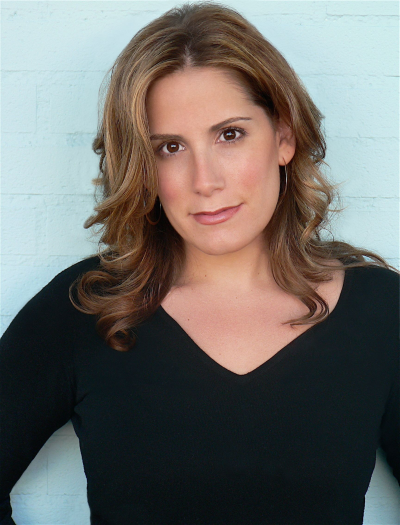 Recently, we were contacted by Julie Buxbaum’s British publishers Transworld about having the chance to interview her. I totally wanted to do that, but I hadn’t yet read her debut novel and her second book wasn’t out then, so I quickly read The Opposite of Love - it was fantastic! - and I managed to get some questions to Julie. Here are her answers, I hope you enjoy the interview!
1. Tell us about your latest book, After You, in your own words.
AFTER YOU takes a look at the question of how well we really know the people we love. The story follows Ellie Lerner, as she travels to London to help take care of her best friend’s daughter, after her best friend, Lucy, is murdered. When Ellie steps into her friend’s life though, she soon discovers that she may not have known all that much about Lucy after all. And learning the truth about her friend may have huge unintended consequences for her own life and marriage as well.
2. Are you currently working on a third book? Can you tell us anything about it, if so?
I am currently working on a third book, but I’m one of those superstitious writers who gets a little nervous talking about something that at the moment is only half-baked. I can say that it is mostly set in the 1950’s. It’s been a lot of fun watching old “Father Knows Best” episodes and calling it work.
3. Your debut novel The Opposite of Love features a lawyer named Emily whose life kind of unravels due to lots of different things. Your website biography tells me you were a lawyer, too, so was The Opposite of Love autobiographical in any way?
Even though Emily and I had a lot in common—both of us were lawyers, both of us lost our moms young—the book is not in anyway autobiographical. I did use my own experiences of mother-loss and daily law firm life to inform the writing, but Emily is in no way me, or vice versa. I like to think Emily is much crazier than I am, and certainly more self-destructive.
 4. “Last night I dreamt that I chopped Andrew up into a hundred little pieces, like a Benihana chef, and ate them, one by one. He tasted like chicken.” How did you come up with that line, for your first chapter of The Opposite of Love? You’ve never dreamt about chopping someone up and eating them, right?
Nope, never dreamed of chopping someone up. I came up that line after a novel-writing class at UCLA, and the professor Mark Haskell Smith (whose work I love) made the point that your first sentence should really be something spectacular. It’s your first chance to make an impression. So with THE OPPOSITE OF LOVE, I went a bit shocking and a bit silly. With AFTER YOU, I chose to immerse the reader immediately into the story and hoped that they would then really want to know what happens next. I can tell you that no writer treats their first sentences casually.
5. The only man Emily feels comfortable having a relationship with is her Grandpa Jack, and that is obvious throughout the entire book, why was it so easy for Emily to have a relationship with him but not with her father or her ex/boyfriend Andrew?
I think because Emily’s relationship with Grandpa Jack was firmly established and totaly separate from her relationship with her mother, it wasn’t threatened by her loss. Because she was not particularly close to her father before her mom died, resurrecting that relationship, particularly with such a painful loss between them, was almost too painful for both of them. And of course, Emily’s fears of commitment in regards to Andrew also stem from her failure to deal with her grief.
6. Moving on to your new book, After You, which I haven’t yet read it (as it isn’t out yet in the UK, and I can’t wait to read it), why did you decide to use The Secret Garden as the book that Ellie picks to help Sophie, Lucy’s daughter, overcome what happens to her mum?
THE SECRET GARDEN is by far my favorite book of all time, so on a personal level, I really wanted to take the opportunity to honor it, and in some ways write an homage. But more importantly, its story of self-healing and redemption in the face of loss is keenly therapeutic and fit perfectly into AFTER YOU’s narrative.
7. I assume from the synopsis that the book is part-set in London, why did you decide to set it there, rather than in the USA?
A huge part of the plot of AFTER YOU is the question of when or whether Ellie will be returning home to Boston to be with her husband. Putting her across the Atlantic heightened the significance of her departure. She can’t just get into a car and go home. She has very literally run far, far away. Also, I thought it would be fun to explore the American expat experience in London, and ironically made the decision to set it in the UK before I knew I was moving here myself. Finally, since gardens play such a large role in THE SECRET GARDEN, and I wanted them to play a part in AFTER YOU, I loved the idea of setting the book in London, which has this whole “private garden” concept that is foreign to most Americans.
8. 20th Century Fox have optioned the film right for The Opposite of Love, can you tell us a little about that? Do they option the whole book, or just the central plot of the book to carry over into a film? Is there any kind of release date or anything yet?
Fox optioned the whole book. I can’t wait to see what they do with it. It will be a literal dream come true to see my book on the big screen.
9. It also appears that Anne Hathaway is attached to the movie, do you see her as Emily? Who would you pick to play Andrew, Grandpa Jack, Emily’s Father and Ruth if you could?
I think she’s absolutely perfect for Emily! Honestly, I don’t think they could have done a better job of casting her character. Anne Hathaway has the ability to do humor and vulnerability and charm that I think will translate perfectly to Emily. As for the other characters, I really don’t know. Since Fox did such a great job with Anne Hathaway, I guess I’ll leave it to the experts! Though I do think Michael Douglas would be perfect for Emily’s father.
10. What did you do when you found out you had gotten a publishing deal? How did it come around?
I cried. I know, embarrassing, but I was so excited and so overwhelmed, I didn’t know what to do with myself. My husband took me out to dinner that night, and I just spent the whole time saying over and over and over again, “Can you believe it? I mean, can you believe it? Seriously?” As for how it happened, after I finished a polished draft of THE OPPOSITE OF LOVE, I queried agents. And then once I signed with my agent—who absolutely rocks by the way—she sent it around to publishers. I got incredibly lucky. The whole thing happened pretty quickly.
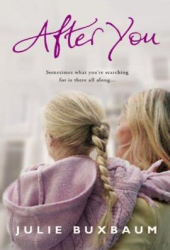 11. Did you have to make any changes to the British versions of both The Opposite of Love or After You before they could be published in the UK?
I ended up making one major change in THE OPPOSITE OF LOVE in both the US and the UK editions because of the British audience. Emily Haxby was originally named Emily Pratt, but my UK editor informed me that British audiences may react too much to the use of the word “pratt.” Interestingly, my husband (who was born and raised in London) had called me a pratt on more than one occasion, and I had assumed the word was a bit more benign than it actually was. He got in big trouble for that one!
With AFTER YOU, particularly because the book is told from the perspective of an American in London, it was important to be precise and use American language intentionally for my American characters, and Britishisms for my Brits.
12. If you were to be stranded on a desert island, and could only take three books, what books would they be?
THE SECRET GARDEN. CRIME AND PUNISHMENT, because I love it and it’s long. And PRIDE AND PREJUDICE, because it never gets boring.
13. What’s the best thing about being a published author?
I look forward to going to work on Monday mornings.
14. Finally, what IS the opposite of love?
Is it too coy to said read the book and find out?
Thanks Julie!
- Digg
- Stumble it!
- Author Interview: Alexandra Potter
- AW Author Interview: Elodia Strain
- Author Interview: Lucy-Anne Holmes