Author Interview: Laura Elliot
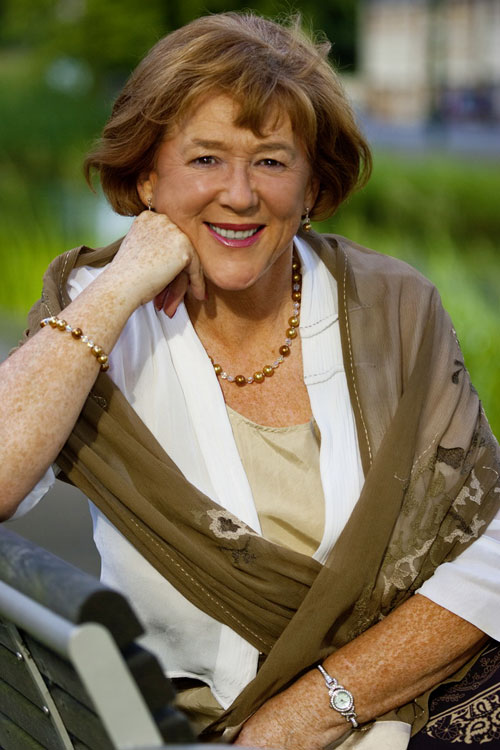 I recently got the chance to read and review Laura Elliot’s second novel Stolen Child which I enjoyed. After reading the book I also got the chance to interview Laura all about her latest book and her first effort. Enjoy!
1. Can you tell us about your latest book Stolen Child?
Stolen Child is set in a modern era and follows the lives of two women, Susanne Dowling, the woman who commits the crime of child abduction, and Carla Kelly, the mother who never stops searching for her stolen child.
When the story begins, Carla is a celebrity model who loves publicity and has used her pregnancy to promote a range of maternity clothes. I deliberately gave her a public face, as I wanted to explore the exploitive nature of the celebrity media and how it can become an enemy as well as a friend.
The story follows the two women through the years that follow the abduction and charts the consequences that spring from Susanne’s impulsive yet deliberate act. When, Joy, the stolen child, reaches a certain age, her voice also becomes part of the narrative as she describes the confusing changes that are taking place in her life.
2. Are you currently working on a third book for Avon? Can you tell us anything about it?
At the moment I’m finishing a book for children and have only a rough idea of my next novel. So, it’s too soon to draw up an outline – but it will be a contemporary novel with a backstory about a young couple who marry under duress when they are very young and she is pregnant. When their last child leaves home they look at each other across an empty space and see two strangers. I’d like to explore what happens to them from that moment on.
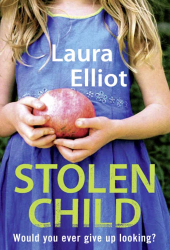 3. You mention at the beginning of Stolen Child that you were inspired by a similar case when you were younger. Did you take any of the aspects from what you remembered of that case, and put them into Stolen Child at all?
The genesis of Stolen Child was a deeply embedded childhood memory. During the early Fifties, a three-month-old baby, Elizabeth Browne, was snatched from her pram in the centre of Dublin City. She was not discovered until four years later. In that time she had lived under a different identity as someone else’s beloved daughter. I remember the publicity surrounding her recovery. Even though I was only a small child, I was aware of the trauma Elizabeth must have endured as she was uprooted from the parent she believed were her flesh and blood and was reunited with her real family – who were strangers to her.
Elizabeth’s story was the catalyst that took me through those difficult opening chapters but soon, as with all works of fiction, that initial idea was buried under the momentum of my own story, the development of my own plot and characters.
As an interesting aside, Elizabeth was one of three babies stolen in Dublin over that four year period. Anyone interested in reading the full story should check the internet under Laura Elliot+Belfast Telegraph to read an account I’ve written about that extraordinary time.
4. What was it like writing two such different and contrasting narratives in Stolen Child with Susanne and Carla (and even Joy, as hers and Carla’s narratives were pretty similar)?
Obviously, it was easier to write from Carla’s perspective. I could empathise with her sorrow and desperation. I’d no intention of including Joy’s voice yet her presence became stronger as the plot developed and she seemed to write herself into the story. Susanne was the most difficult. Her narrative took many forms until I decided to use a journal format.
Initially I just wanted to write her story through from beginning to end – and follow with Carla’s story. When I’d finished both narratives I intended working out how the chapters would alternate. But I found that their lives were so intertwined that I couldn’t progress with the plot unless I went from one woman’s mind-set to the other as the years passed.
5. Can you tell us about your debut novel The Prodigal Sister? Where did your inspiration come for it, did you base the sisters on your own, if you have any (your biography doesn’t mention whether you do or don’t have sisters)?
I have one sister who is very dear to me – but she did not feature in The Prodigal Sister. That story began when I was on a tour of New Zealand in a camper van with my husband. We travelled vast distances to get from one location to the next and, as Sean loves driving, I was happy to leave him at the wheel. But living and cooking in such cramped circumstances can be difficult. The idea of a group of sisters, each with their own history, travelling together in a confined space to confront their past evolved as we toured. I kept a journal throughout the trip. In The Prodigal Sister I followed the same route as we took off across New Zealand’s magnificent South Island. I was particularly anxious that the landscape would link to their emotions and found that quite a challenging concept.
6. How different do you find writing for adults than writing for kids? Is there one you prefer?
Writing for adults is more demanding - and writing for children more rewarding, not financially but in terms of their emotional response. I wrote twelve books for children before I wrote my first novels for adults.
By that stage I realised the issues I wanted to explore would be difficult to do in a book for children. But one of my pet hates was when friends would say, “When are you going to write a real book?” I can’t say I prefer one type of writing above the other as I tend to become totally engrossed in whatever book I’m doing at a particular time.
7. Where did Laura Elliot come from, for your pseudonym, and why did you decide to write your adult books under a different name?
The Prodigal Sister is my debut novel under my Laura Elliot pseudonym but I had already had two books for adults (When the Bough Breaks and Deceptions) published under my own name in Ireland. AVON/HarperCollins believed that my own name, June Considine, was still too synonymous with children’s literature and it would be better to create a new identity for the books they intended publishing. Laura is one of my favourite names. For my surname I closed my eyes and ran my finger along my book shelf. I stopped at the Mill on the Floss by George Eliot, added another L and suggested it to my editor as my pseudonym. They agreed and Laura Elliot was born.
8. If you were sent to a desert island, and could only take three books, what would they be?
What a difficult choice. The Lovely Bones by Alice Sebold, Cold Mountain by Charles Frazier and The Handmaid’s Tale by Margaret Atwood.
9. How did your publishing deal with AVON/Harper Collins come around?
My agent submitted The Prodigal Sister to AVON/HarperCollins. They were interested in publishing it but anxious to know if I had another book in the pipe line. I was feeling drained after finishing The Prodigal Sister but when my agent rang looking for a quick answer, the memory of the stolen child that had stayed with me through the decades reared up, as if it had been waiting for that precise moment to trigger my next book.
10. Stolen Child ends in such a way that a sequel could certainly be a possibility, would you ever consider that?
Yes, I’ve wondered about Joy and Joey – if they have a future together. I’ve also considered a sequel to The Prodigal Sister. I’d love to follow Lauren’s pregnancy as she struggles to free herself from her manipulative husband and stand on her own two feet.
11. Do you have a special place in which you write your books or do you just write wherever you happen to be at any given time?
I try to be as disciplined as possible. I’m an early bird and am usually at my desk by eight in the morning. I break for lunch and if work is going well I’ll do a few hours in the afternoon. I’ve learned to take the productive and non-productive days as part of the one package and not get too frustrated if the writing doesn’t go as well as I’d hoped.
12. Finally, what advice would you give to writers hoping to one day become a published author, like yourself?
* Jot ideas down in a notebook and try to allocate a certain time each week to writing. Don’t put off writing your book until ‘the right time’. It never comes. Develop a rough first draft. At that stage, all that matters is finding a beginning, middle and end. Don’t waste time trying to write the perfect first chapter. As your book progresses, you could end up changing, even deleting it. Do at least three drafts. Each time you work through your story it becomes more defined, stronger in content. Don’t be afraid to edit, edit, edit… Have patience, commitment, endurance, self-belief and a tough skin. Don’t be too disheartened if your work is rejected. Remember, many published and successful writers faced the sting of a rejection slip early in their careers. For more detailed information I’ve included tips for writing a first novel on my blog at www.juneconsidine.com.
Thanks so much Laura!
- Digg
- Stumble it!
- Author Interview: Alexandra Potter
- AW Author Interview: Elodia Strain
- Author Interview: Lucy-Anne Holmes