Author Interview: Abby McDonald
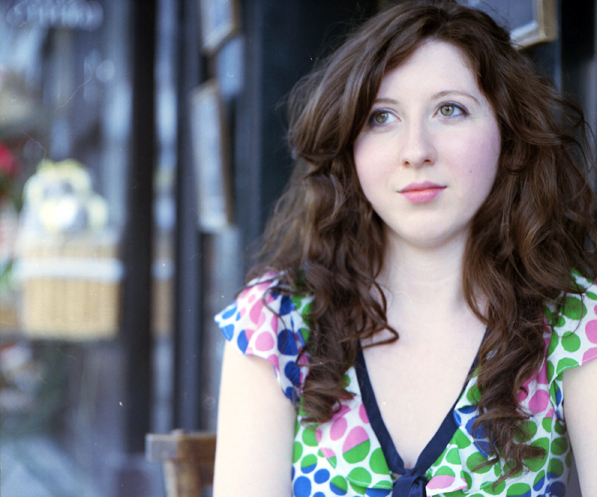 A couple of weeks ago I got the chance to interview the lovely Abby McDonald and with her latest adult novel, The Liberation of Alice Love, hitting the shelves last week, now is the perfect time for you to read it! I absolutely loved the book, and we’ll be reviewing it tomorrow, and the interview is just as great! Enjoy.
1. Tell us about your latest book The Liberation of Alice Love.
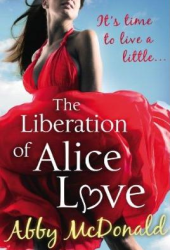
I’m tempted to just paste in my back cover blurb, but I’ll be good  The book is about an organised, go-to girl, Alice, who is shocked to find herself the victim of identity theft: someone has drained her savings, maxed out credit cards, and taken out loans totalling almost 100,000 pounds! With the help of a rather dashing investigator, Nathan, Alice struggles to untangle the wreckage, but when she discovers that the thief is closer to home than she ever imagined, she becomes obsessed with tracking them down…. only to wonder if the glamorous, adventurous life being lived in her name isn’t one she wants for herself.
2. The plot of The Liberation of Alice Love is fairly complex, where did the idea come from for Alice to have her identity stolen? Has anything of the sort ever happened to you?
No! Luckily, I’ve never had a problem with identity theft myself - except the usual debit card fraud attempts. Identity theft is a step beyond that: where someone actually impersonates you, using fake or real ID, and signing up to all sorts of things in your name. I did a lot of research, to make sure the plot was possible, and all the experts I talked to gave me these long lists of simple ‘how-to’s that were quite terrifying! It’s incredible how easy it is, and how we don’t even think that somebody will try.
The idea for the book actually began when a friend forwarded me an article about a pair of American identity thieves. They were in college, and actually pretty inept (they stole from friends, under their own names, and posted photos of their glamorous adventures on facebook!) but it planted the seeds of identity theft as something relevant to people in their 20s/30s. I’d heard about it before, but it always seemed more abstract: computer hacking, and things like that. But what if it was somebody you knew impersonating you? And, for that matter, how well can we really know anyone we meet - even people we think are our friends?
All my books touch on the concept of identity, so this was a great chance to delve deeper. Another big part of the book is trust, and lying, and the different versions of ourselves we present in life. We all talk about ‘reinvention’, with makeovers and shopping, but what if that temptation to escape the past drove us even further - to take on new names, and even new lives? Alice starts out not even comprehending how somebody could do this to her, but throughout the book, she begins to see the appeal of creating herself from scratch.
 5. Alice changes over the course of the book, she seems to come out of her shell as the book progresses, how did you pinpoint the exact moment for the change, is it something you had always planned or did it happen naturally whilst writing?
I always plot the main character’s journey before I start writing, so I knew Alice was going to face some big changes in her life: not just in her home life and job as she struggles to unravel the fraud, but within herself, and her relationships.
Something I liked using was the idea of her name; I always think that names have a strange power over us, and our perceptions of ourselves (which is why it’s so hard naming characters!). I was nearly named Poppy, and I wonder how that might have changed who I am as a person, and how other people respond to me. I don’t want to give anything away, but a specific moment of change for Alice is definitely when she explores the possibilities of her name, and how liberating it is, perhaps, to be free of it…
5. Can you tell us a little but about your debut adult novel The Popularity Rules? Does such a rule-book exist?
The Popularity Rules is about a jaded, abrasive music writer, Kat, who - being jaded and abrasive - winds up losing her job, and has to turn to her ex-best friend for help - and the top secret guide to social success that drove them apart a decade ago. It’s about friendship, feminism, and the compromises we make to get ahead; it came out in 2009, and was a Glamour Magazine Must-Read, and got 4-stars in Heat and Closer (I went and bought a dozen copies!).
The rules themselves are included between each chapter - I actually wrote them myself! I spent the summer in Borders (RIP), consuming every self-help book on the shelves, and came up with this great Art of War - meets - Mean Girls take on popularity and success, it was a lot of fun. Basically, you have to be a sociopath to make it work - so, far too much effort for me!
5. You also write books for teens, Life Swap (Sophomore Switch in the USA) and Boys, Bears and A Serious Pair of Hiking Boots, which do you prefer - writing for teens or for adults?
Oooh, that’s hard. I love both for different reasons: my teen books are much lighter, and it’s so much fun to be a teen again for a while - with all the heartache and insecurity that entails. With my adult books, I love drawing out more subtleties in the morality and character experience. I delve a little deeper, and address issues around careers, ambition, adult relationships, etc.
7. To top all of that off - writing for teens, writing for adults - you also write screenplays. Is writing screenplays different to writing books at all? What kind of screenplays do you write? Have any been picked up?
Yes, it’s very different. I only started this year, adapting The Popularity Rules as an intro - and nothing’s been picked up anywhere - but it’s been a fascinating experience. As well as being 90% dialogue, screenplays are 120 pages max, so it trains you to be incredibly economic with your words - very different from having a leisurely 450 pages to play with! But, I absolutely love it already: I always write ‘seeing’ my books as scenes, so this way, I jump right to it.
I write in a similar vein to my novels; so, commercial, female-driven stories, a la The Devil Wears Prada. I’m working on a ‘proper’ romantic comedy right now, inspired by all those wonderful Doris Day/ Rock Hudson movies, so I’m doing a lot of rewatching as, ahem, research…
8. Now this isn’t a facetious question, but where do you find the time to write so much. I mean, most authors seem to work on a yearly schedule for books but you’ve published (so far) a teen book a year and an adult book a year, for the past two years, so how do you manage to fit all of that in as well as writing screenplays? Do you ever sleep?! Do you plan to carry on writing so much or may one of them have to give way?
Ha, as my family and friends will tell you - I do sleep. And nap, a lot
I’ve been so lucky to be able to write full-time, so it’s been my job for 3 years now, but you’re right - it is very time-consuming. I’ve done 2 books a year (plus new proposals, edits, copy-edits, promo etc), and found that’s just about my limit. Something had to give, to take on new opportunities, so right now, I’m taking a break from the adult books to make some room for screenwriting - but I’ll still be writing novels at least half the time: I’m contracted up for another 3 teen books.
9. Did you expect that at the age of 25 you would have four books to your name, or was it all a total surprise? How did your adult publishing deal with Random House come around?
It is a lovely surprise: I look at them all lined up on the shelf, and really can’t believe it. I started writing at 19, and aimed to be published one day, but the industry is so competitive, you can never plan or expect anything.
I sold my teen book, Sophomore Switch first, but I had actually been writing the adult novels longer, and was working on The Popularity Rules for a few years before it was ready. I queried some agents in 2007, and was thrilled to get a reply from Jonny Geller at Curtis Brown the same day; I sent the manuscript on Monday, and on Friday he called to offer representation. We worked on the book a while, and then submitted it to publishers that autumn - who all rejected it!
I was upset, of course, but instead of putting the book aside, I was determined to make it work. So, I pretty much started writing from page 1, with a new setting, new subplots - pretty much everything new except that premise, and the central friendship between Kat and Lauren. I was about 30,000 words in, when out of nowhere, one of the editors who had rejected it - the wonderful Emma Rose - called Jonny up and said that she hadn’t been able to stop thinking about it! He sent her the new chapters, and right away, she signed me up in a 2-book deal. So: it was a long, hard journey, but because we all had faith in the book, it made it onto the shelves.
After that, writing The Liberation of Alice Love was rather straightforward, although I had the pressure of creating it in 9 months, rather than 4 years!
10. Your teen books are already published in America, but I hear The Liberation of Alice Love will be your first adult novel published in America next year, will you have to make any changes at all to the book or will it be published word-for-word as the English version?
I’m not sure yet, but there will probably be some edits, for language and Britishisms. With my teen books, my American editors change all my British references, and then the British editors change them right back.
11. What are some of your favourite books when you get the chance to read?
Right now, I’m enjoying some of the Persephone classics: ‘Miss Pettigrew Lives for a Day’ by Winifred Watson, and the fabulous ‘Miss Buncle’s Book’ , by D.E Stevenson. I love Emma Forrest’s writing, and Sarra Manning; my favorite books are ‘Love Walked In’, by Marisa de los Santos, and the little-known ‘The Thing About Jane Spring’ by Sharon Krum.
12. Which writing style do you prefer? Third person or first person, and why?
Another tough one! I love the informal, chattiness of 1st, but I think 3rd wins, because I can be more elegant with the tone. Either way, I always write in limited perspective, so we only see what the lead character does.
13. Finally, what advice would you give to wannabe writers?
Don’t give up. Trite, I know, but definitely true. Your first book may not make it (mine didn’t… or the second…) but everything you write will make you a better wordsmith. It was only by book 4 that I felt I was really getting to grips with structure and plotting, so don’t feel it’s been in vain if you haven’t landed an agent or publishing deal with a certain manuscript: just put it aside, and move on. Also, be prepared for an awful lot to rely on luck and timing, which can be so frustrating!
Thanks so much Abby!
- Digg
- Stumble it!
- Author Interview: Alexandra Potter
- AW Author Interview: Elodia Strain
- Author Interview: Lucy-Anne Holmes