
Author Interview: Louise Candlish
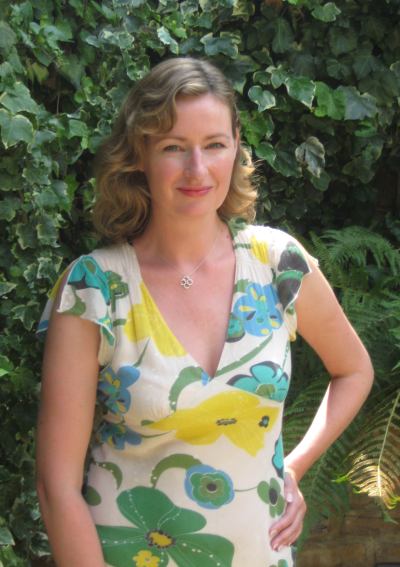 When I first picked up Since I Don’t Have You by Louise Candlish a couple of years ago, I had no idea how much I would love. I did love it, and it would rank pretty far up on my list of favourite ever books. So when I received a copy of Louise Candlish’s new book, Other People’s Secrets, to read I was thrilled. I’ll be reviewing it on Friday, but we also got the chance to ask Louise some questions, so here is her interview. Enjoy!
1. Tell us about your latest release Other People’s Secrets?
It’s the story of two families who meet in Lake Orta in Italy. One couple, Ginny and Adam Trustlove, are recovering from a tragedy, the other, the Sales, are having a dream holiday, or so the Trustloves think. Then a character called Zach comes to town and proves to be a bit of a cat among the pigeons. There’s quite a lot of forbidden passion, quite a lot of telling of lies.
2. At the back of Other People’s Secrets is news on your next book The Homebreaker, can you tell us a little bit about that, too?
It’s about hero worship. A not very heroic man does something heroic and sparks a profound bond between him and the woman he has helped. The problem is he has just married someone else. As with many of my characters, there is a certain amount of ambiguity and so I have no idea whether readers are going to sympathise with the lovebirds or not. I do.
3. Your debut novel, Prickly Heat, appears to be more ‘chick lit’ than your latest books. Was there a reason you decided to change your genre slightly, or to make your books a bit more serious, or was it a natural progression?
I didn’t really consider Prickly Heat chick lit in the sense of romantic comedy – the only book I’ve actively tried to be funny in is The Double Life of Anna Day (my third). You’re right, with my fourth, Since I Don’t Have You, there was a noticeable change, which I suppose reflected a kind of growing up in me and maybe even a kind of weird gloom. I think a certain melancholy has been evident in all my books, including Prickly Heat.
4. When I first picked up Since I Don’t Have You, your fourth book, I wasn’t totally sure it was something I would enjoy however I thought it was a stunning read and would rank fairly high on my list of favourite books. The tragedy in the book truly shocked me. How did such a plot come to you? And why did you decide to set the book mainly in Santorini, a Greek island?
I find it hard to explain how this one came about; I certainly didn’t expect it to be the one that ignited things career-wise. I was feeling quite isolated, I think, as a new mother, and full of fears about my daughter. I was feeling the kind of intensity I had not known existed before I became a parent. I was thinking, if she dies, could I go on living? In terms of location, I had been obsessed with Santorini for years. There was no other possibility in my mind: this was where Rachel would flee. I would do the same myself: literally live in a cave on the cliffside.
5. Now, I hope you don’t mind me asking this, but I read Before We Say Goodbye last year, and while I enjoyed the book, I was a bit confused. Olivia is mad at her mother for deserting her for the majority of her childhood but when push comes to the shove, she does exactly the same thing to her young children. Didn’t that make Olivia a bit of a hypocrite? Or was that the intention all along? For Olivia to realise parents can desert their children and there are a variety of reasons for doing so?
I don’t mind at all, I love my characters to provoke strong reactions. Some readers have found Olivia’s actions hard to stomach, others see her as a heroine. To me she is depressed and confused, on the verge of a breakdown. Grief makes her behave irrationally and selfishly. I was intrigued by the idea of history repeating: Olivia has never forgiven her mother for her desertion and, as you say, she needs to try it for herself to see how it can happen to any of us. The problem is, if you fall in love along the way, then all bets are off.
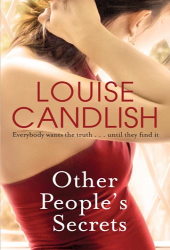 6. Your latest book, Other People’s Secrets, brings the Sale family to the attention of Ginny and Adam Trustlove. What do you think it is about society today that makes us want to know the secrets of someone else?
It is a rare person who does not want to know how they shape up next to someone else. What I wanted to show with the Sales and the Trustloves is that there is no such thing as a pure failure or a pure success. We all experience elements of both. On a baser level, if someone is obviously hiding something then it makes you desperate to find out what it is, and if they’re so obviously hiding it then maybe they want you to find out, too.
7. Why did you decide to set Other People’s Secrets in Italy, on the beautiful Lake Orta? Is Villa Isola, where the Sale family stay, an actual villa or is it just based on the many villas I assume are dotted around Lake Orta?
I wanted to place the characters somewhere quiet and isolated, so they could focus on each other. I wanted to see if being somewhere astonishingly beautiful makes a complicated emotional situation harder or easier. Some of the physical details of Villa Isola are inspired by a hotel there, a Moorish folly called Villa Crespi.
8. How much research does it take to fully be able to get the feel of the fantastic destinations in which some of your books are set? I bet it’s fantastic to head to destinations like Italy (Other People’s Secrets), Greece (Since I Don’t Have You) and Paris (where The Homebreaker is to be set, at least in part, from what I’ve read of the blurb.)
I spend a few weeks in each destination and get an awful lot done in a short time. It’s quite lonely. Choosing foreign locations comes less from any passion for travel of my own as from my interest in how differently people behave when they are away from home, especially on holiday. I find that totally fascinating.
9. In Other People’s Secrets, Ginny and Adam Trustlove have had a rather difficult time, how hard was it to write about the things they go through? Do you ever feel superstitious when writing about such tragic events? Kind of like a ‘touch of wood’, thank God this hasn’t happened/hopefully will never happen to me?
I do find it hard to write about personal tragedies, especially concerning children, and I worry these scenes are a bit less polished than some of the others because there’s only so much revisiting I can bear to do with the text. I don’t feel at all superstitious – I have many weaknesses but superstition is not one of them. I regularly walk under ladders.
10. How did you become a writer? Is it something you always wanted to do?
I think I always thought I would be a novelist, but for many years I put off trying it out because it seemed too much like hard work! I used to be incredibly hedonistic; I was never going to be one of those authors who gets up at 5am to put in 1,000 words before going into the office to do a full-time job. More’s the pity.
11. You’re currently published by Sphere, an imprint of Little, Brown, how did your original publishing deal with Arrow come around and, later, your deal with Sphere?
I was signed by Arrow after my agent submitted Prickly Heat in 2002. One of the editors there loved it and I loved her and it all seemed like a dream come true, but she left a few weeks later and it never really worked out after that. They decided they didn’t want me after the contract was up. I realised then that it was crucial to be with the right publisher; with the wrong one you simply slip through the net. I had really admired what Time Warner (now Little, Brown) had done with certain debut writers and by coincidence an editor there, Jo Dickinson, had liked Prickly Heat. No one else was offered The Double Life of Anna Day; my agent and I decided we didn’t want anyone else for me but Jo. We still feel that now.
12. When you’re not busy writing your own books, what kind of authors do you like to read? Have you ever re-read any of your books?
I love North American women’s fiction: Margaret Atwood, Anne Tyler, Anita Shreve. I like laugh-out-loud British chick lit like Bernadette Strachan’s. I do sometimes reread my own books, especially if I have to talk or write about one in particular. Funny you should mention Since I Don’t Have You because I picked it up yesterday for the first time since publication and the very first page I read made me want to cry. I can’t believe I put readers through that.
13. Would you ever bring any of your characters back for a second book, or do you just enjoy having them around for the one book before moving on to other characters?
Actually, Other People’s Secrets is the one that lends itself best to a sequel because there is a sense that the story is just beginning. Already early readers are quizzing me about one relationship in particular: will it last? The answer is, I hope so!
14. Finally, what writing advice would you give to those hoping to someday be a published author?
You must be realistic and expect downs as well as ups, especially in the period between finishing your first novel and finding the right agent and publisher. It could take years! Do not read about other first-time authors’ instant success stories or you will lose the will to live, let alone write. Every writer’s path is different and if you are talented then you will find the right people to get you on your way. Bonne chance!
Thanks so much, Louise!
- Digg
- Stumble it!
- Author Interview: Alexandra Potter
- AW Author Interview: Elodia Strain
- Author Interview: Lucy-Anne Holmes




July 8th, 2010 at 5:43 pm
I enjoyed this especially hearing about the new book thankyou!