Author Interview: Giselle Green
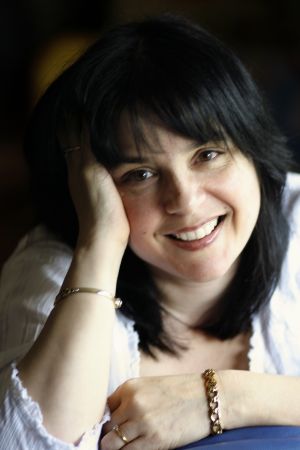 Picking up Giselle Green’s 2009 release Little Miracles, I had no idea what to really expect. Giselle was billed as the ‘British Jodi Picoult’ so I started it eagerly. I absolutely adored it and it won a Chick Lit Award 2009 in Women’s Fiction Book of the Year. Just after I finished reading the book, I emailed Giselle to tell her just how much I’d loved her book. She was thrilled and as well as sending me her other two books (can’t wait to get stuck into them), Giselle also agreed to do an author interview. Now, with her latest book A Sister’s Gift about to hit the shelves, here is that author interview:
1. Tell us about your next novel A Sister’s Gift?
It’s a story of sibling love, rivalry and the extreme lengths people will go to, to achieve their heart’s desire. Hollie, desperate for a baby, asks her blonde bombshell younger sister Scarlett to act as her surrogate. Unwisely perhaps, as Scarlett is the least maternal woman in the world, but when she finally agrees to help she has her own ulterior motive for doing so. Both sisters are blind themselves to the consequences of their actions till the day comes for payback… It’s also, ultimately, about forgiveness.
2. Are you working on a fourth book? (I really hope so!)
I’ll definitely be working on a fourth book sometime soon, but I’ve only just sent this one off. Having come to the end of a three-book contract I’m delighted to have a little bit of space to allow the next book to come in gently. Having said that, I’ve got some interesting thoughts and ideas for what’s coming next…
3. In the acknowledgements for Little Miracles you say it came to you during a Reiki session, can you tell us exactly what it was that came to you that day?
It was a rather bizarre experience, and one that hasn’t repeated itself since (somewhat to my disappointment!)But, basically, in the Reiki session which took place in February 2007 the lady just put her hand on my shoulders and I felt very relaxed, not quite asleep as I could hear the birds and cars outside but I was simultaneously aware of a very vivid scene taking place in the landscape of my mind. It was so vivid, I honestly might have been watching a film. I could see a young family on a boat, just off the coast of South America. Then the toddler – a boy – was suddenly missing. I could feel what all three of them were going through – the child, too, whose grief was intense at being separated from his parents. I felt it might have been set up to appear as if he had gone overboard but in fact he had been hidden by someone on board. Various things came into my mind right then – some issue with the child’s left eye, saint Joseph was involved too - I had no idea how. When I came to write the story, logistically, I had to move the disappearance from off the boat and onto the shore. I changed the location from South America to Spain. I incorporated a lot of what I ‘got’ that day in whatever way seemed fitting. The boy’s father Charlie, for instance, gives the mother Julia a St Joseph medallion, which becomes a symbol of what happens to them in the end. I gave the boy’s stuffed elephant a dodgy left eye – there were lots of bits and pieces like that. The main thing I took away from the experience was the huge grief and determination of the mother to find her child.
4. Little Miracles has a quite open ending allowing the reader to make their own opinions, why did you decide to leave it like that? Would you ever write a sequel to Little Miracles?
In a book like this, if you spelt out the outcome too much I fear it might have felt a bit twee. I did leave a lot of clues in the last few chapters so anyone who doesn’t get it first time round should certainly do so on re-reading it again. Especially if you re-read it in conjunction with the first chapter… The answer is there, honestly.
The other thing was, I really felt that the main thrust of the book was the question; how do a couple survive such a devastation? All the time I had going through my mind, the Serenity Prayer of St Francis of Assisi; ‘God grant me the serenity to accept what I cannot change, the courage to change what I can, and the wisdom to know the difference’. This is the central tension running throughout the whole book. I feel in the end, it is resolved and so, no, I don’t mean to write a sequel to this book. I said what I had to say.
5. How much research was required for Little Miracles? 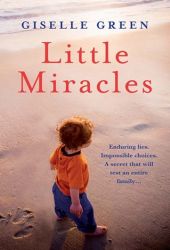
I was using a lot of what I already knew in this one. Having spent eleven years growing up in Gibraltar, I was familiar with Spain and its customs and the way people are with each other, the culture. A lot of it I made up – like the description of the inside of the Spanish police station for instance! But the place descriptions and the types of houses and the colours and smells of the place are real because I’m familiar with the locality. Arenadeluna I made up because it had to be a place that was the way I wanted it – but the descriptions will ring a bell for anyone who’s visited along the Costa del Sol.
6. Following on from the following question, did you spend a lot of time in Spain so you could get everything completely correct? Is Arendaluna an actual place in Malaga?
Oops I think I already answered that one above!
7. What was your journey to being published?
I have been writing stories pretty much since I could hold a pencil. I’d written several novels over the years before I finally got accepted with Pandora’s Box. Interestingly, that was the first one I wrote in FPPT and I felt very comfortable with it, and I found I was also comfortable writing about subjects that might seem ‘difficult,’ or edgy. After years of getting nowhere trying to find a publisher, I suddenly had both an agent and a three- book contract, literally within 6-8 weeks of having typed ‘The End’. It was that quick. But it took a lot of perseverance to get to that stage in the first place. I hold that all the writing I did in the ‘waiting to get published’ years serves me in good stead now – it is all good practice, and every word you write makes you a better writer.
8. Who are some of your favourite authors/books?
I mainly read metaphysical books about astrology and all sorts of weird stuff! I don’t believe everything I read, but there’s often a lot of wheat in amongst the chaff. Fiction-wise, I love reading beautiful writing – Daphne du Maurier has been an all-time favourite, and I appreciate authors like Deborah Moggach who can bring characters very much to life. I read an awful lot more as a child and my favourite author then was the wonderful Rosemary Sutcliff, who even invited me home to tea a few times (many years later, once I’d come back to the UK that is!) and was generous enough to encourage my own writing efforts.
9. What’s the best thing about being an author?
You get to do what you like to do best for a job! I feel very privileged, honestly, but I’m not under any illusions about how much hard graft and sheer perseverance it takes to do this job. It’s not for the faint-hearted, but if you can maintain faith in the process it’s a very rewarding experience.
Thanks so much Giselle!
To learn more about Giselle, please visit her website: http://www.gisellegreen.com/
- Digg
- Stumble it!
- Author Interview: Alexandra Potter
- AW Author Interview: Elodia Strain
- Author Interview: Lucy-Anne Holmes