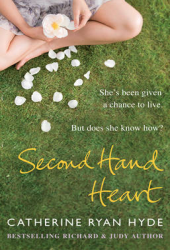
 Vida is 19 and has never had much of a life. Struggling along with a life-threatening heart condition, her whole life has been one long preparation for death. But suddenly she is presented with a donor heart, and just in time. Now she gets to do something she never imagined she’d have to do: live.
Richard is a 36-year-old man who’s just lost his beloved wife, Lorrie, in a car accident. Still in shock and not even having begun the process of grieving, he is invited to the hospital to meet the young woman who received his wife’s donor heart.
Vida takes one look at Richard and feels she’s loved him all her life. And tells him so. Richard assumes she’s just a foolish young girl. And maybe she is. Or maybe there’s truth behind the theory of cellular memory, and maybe it really is possible for a heart to remember, at least for a time, on its own.
Second Hand Heart is both a story of having to learn to live for the first time, and having to learn to live all over again.
Vida means “Life” in Spanish. Ironic enough, the actual Vida has a life that revolves around death, or at the very least the almost near certainty of it in her near future. When Vida is suddenly given a second chance at the hand of another she does what comes naturally, she seeks out the one her new heart has lost - Richard. It’s Richard’s loss and Vida’s gain that moves them both forward in life, their paths intertwining, but not exactly in the ways you’d expect. Both seeking something just beyond their grasp, but more important than either can comprehend in their current situations. Life.
Obviously I’d be remiss to fail to mention how Second Hand Heart initially drew me in because of its similarities to the popular movie, Return to Me. It’s one of my favorites. But outside of the fact that both the book and the movie have heart transplant patients as the central character and a love story of sorts, they truly are very different. One major difference being that Richard, the husband who lost his wife chooses to remain in open contact with whomever receives his late wife’s organs. This is crucial, because were it not for this very unique interaction between Vida and Richard the story could be completely different. Both are excellent though, mind you.
Vida. Her character was so well developed. Honestly. You could tell from the very beginning she’d had a lot of time to think. She was okay with death, which for most of us is quite the opposite. Once she’s given the opportunity to be free of this daily burden she hardly knows what to do with herself, and it’s evident even in the way she speaks. In the beginning of the story you almost want to shake her, she’s so passive. After a while though I came to realize that was just another way of coping, of helping those around her deal with the death she’s already come to grips with. After her life “begins” she’s like a kindergartener asking a thousand questions, making demands, and always seeming to wander aimlessly but with a purpose. By the end, she finally comes to a certain easiness with her new life and I loved the transformation.
Richard was a completely different situation all together for me. I felt like I could relate so well to him in so many situations. His fear for his wife’s heart now in Vida’s small body and his utter confusion at how to proceed with life. I think so many of us are like this. We live life taking for granted the things we hold most dear, until one day they are just gone. Most of us don’t get the opportunity for long good-byes like Vida thought she had, although I’m not sure it entirely matters. I think what I was reminded of most with Richard was the importance of truly loving those we care for like we may not see them even a few moments later. Make sure we appreciate them, tell them and be mindful of them. Because you never know.
Second Hand Heart was more than a story about a girl who got a second take on life and fell in love because of it. It’s about living and appreciating and loving. Never letting go, but remembering that life stops for no one. Both Vida and Richard had incredible journeys to struggle through, both extremely different in ways and so similar in others. And once they’d realized they needed each other, they were finally able to move forward and live.




 Since November 2009
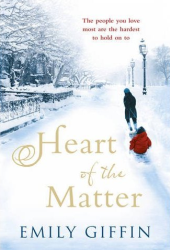 Tessa Russo knows what it’s like to be married to someone always on call. Her husband Nick Russo is a leading pediatric surgeon and when a call comes in on the night of their anniversary, she knows it’s not his fault and has learned to live being married to a man dedicated to his job.
  Posted in 2010 releases, Book Reviews, Rating: 3/5 | 1 Comment »
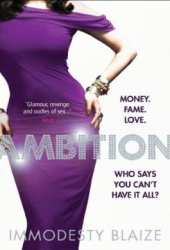 Sienna Starr is grateful for what being the daughter of burlesque star Tyger Starr brings her, but also wants to break out on her own. She loves being a chorus girl in a dancing show, but is determined to be a star in her own right, and shine as the lead dancer. Unfortunately, Sienna seems to have made an enemy of the show’s leading lady Brandy Alexander, and she’s determined to make Sienna’s life hell, not wanting her to take any shine off Brandy herself. However, when someone from Brandy’s past shows up and threatens to wreck everything she has worked hard for, how far will Brandy go to protect herself? Will Sienna be able to reach her dreams of being a leading lady herself, and sort of her own personal demons with boyfriend Max too? When does too much ambition become a bad thing?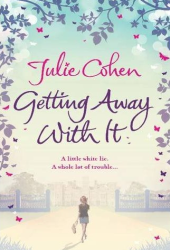
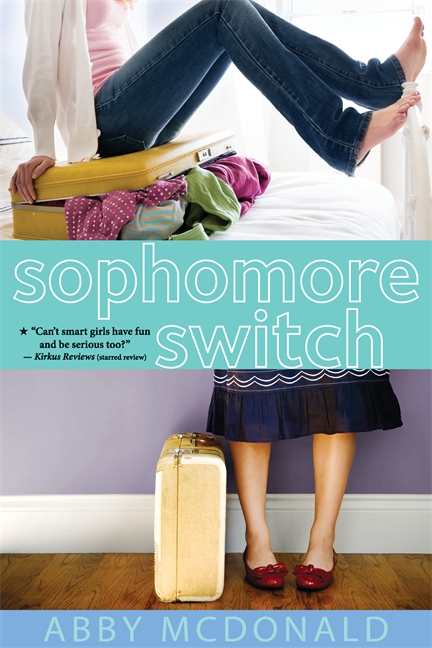
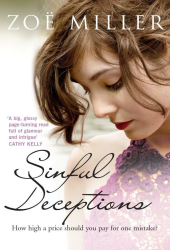
 Charlotte Williams pretty much has it all. Her musician father’s success means that Charlotte wants for nothing, and she has a close group of friends who she enjoys going out with and having fun regularly. But when her father is arrested for a huge fraud case, Charlotte finds that her world has started to collapse around her. She’s got no money, no family and no one to look after her. She decides to flee to New Orleans and the home of her former Nanny, the only place she knows she will feel safe from the paparazzi. She begins to work for the first time in her life, and also reignites her own love for music and singing, but there is someone out there determined to make Charlotte pay for what her father has done to hundreds of people. Can Charlotte escape the madman before he gets to her?